Black Summers: Growing Up in the Urban Outdoors
- Edited by Desiree Cooper
- Wayne State University Press
- 224 pp.
- Reviewed by Cheryl A. Head
- July 6, 2026
An expansive exploration of summertime Detroit.
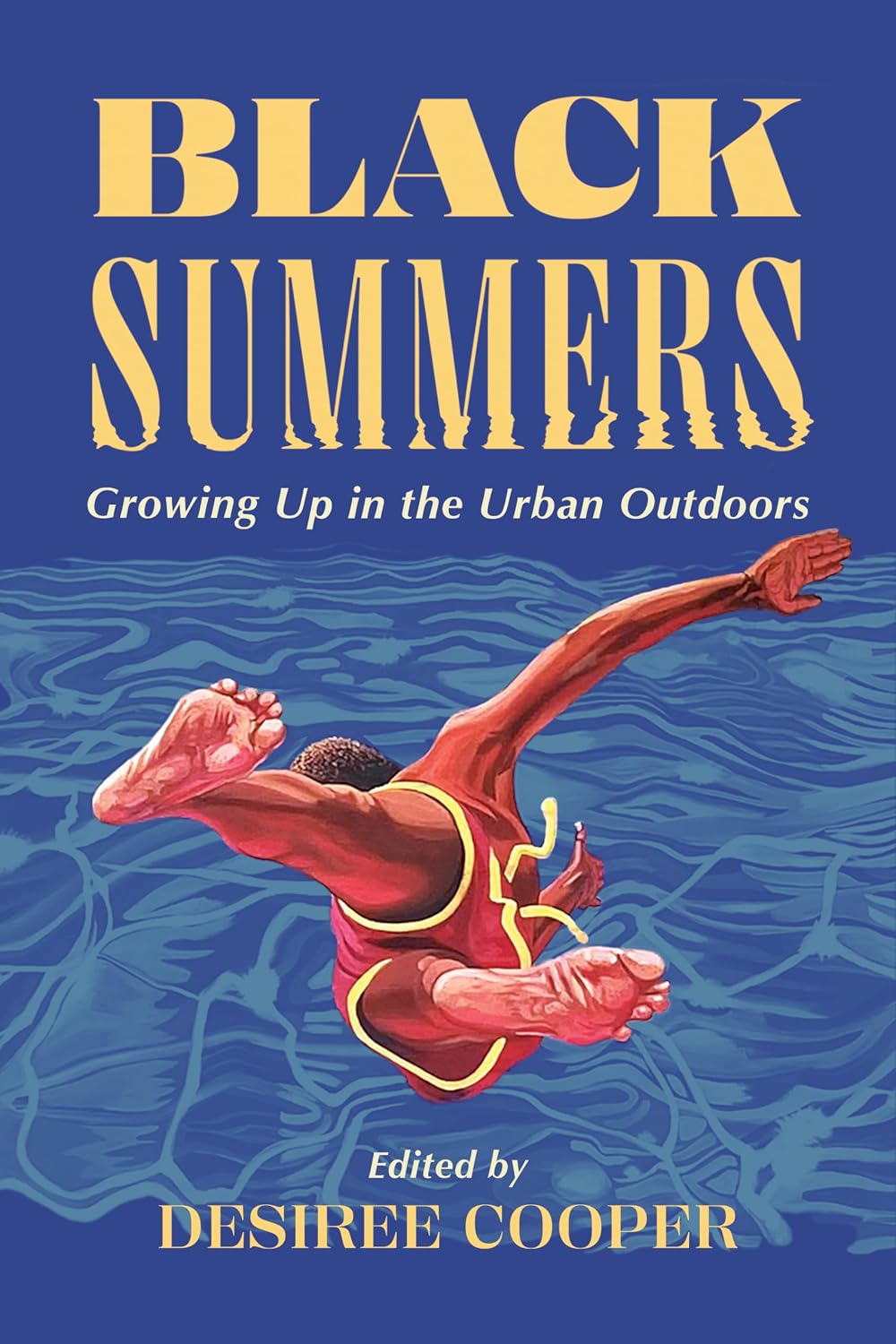
Sometimes, a book connects with you viscerally and you don’t know why. That isn’t the case with Black Summers: Growing Up in the Urban Outdoors, by Pulitzer Prize-winning journalist and author Desiree Cooper. These 33 collected works set in and around Detroit are a contemplation of my own formative years in the city.
The offerings (some by writers with decades of success, and others by those newly published) include essays, poems, comics, memoir, and short stories. What connects them is pride of place, shared memory of summer’s joys and tribulations, and an innate understanding of injustice.
Black Summers is, in fact, inspired by an old injustice. For 85 years in Detroit, the 90-minute river excursion to the Boblo Island Amusement Park in Canada was a rite of summer. But, it wasn’t always so. In 1945, Sarah Elizabeth Ray, a young Black woman in her 20s, was refused entry to the Boblo boat. Ray sued the owners for violation of her civil rights — she felt everyone should be allowed to experience the joys of the outdoors. Ray’s winning lawsuit, upheld by the U.S. Supreme Court, became a precedent for public-accommodations cases. When Cooper interviewed Ray in 2006, it sparked her to bring the civil-rights pioneer’s story to a broader audience. Black Summers, with its half-dozen references to Boblo, is a vehicle for that acknowledgement.
In the essay “The Daddy, the Isle, and the Tunnel Drive,” contributor Zig Zag Claybourne orchestrates a celebration of Belle Isle, another iconic Detroit attraction. The story of a family visit to the 982-acre park, designed by Central Park landscape architect Frederick Law Olmstead, is an ode to Claybourne’s father’s favorite summer pastime — fishing. He writes:
“Fish lined up to play their parts in his open-air symphony. If he’d had a podium and a baton it would’ve felt right. Silently slide a curling worm onto the hook; thwip the air with the tip of the rod arching back. The fishing line was one with his intention. It flew precisely where he wanted it to go, then joined the water in a chorus that said to the fish, very clearly, come to me.”
Not surprisingly, cars show up a lot in Motor City summers. But so do bicycles — metaphors for freedom. The perfection of three kids balanced on a bike, a parade of multiracial bikers in a community ride called “Slow Roll,” and the perceived peril for 10-year-old girls biking beyond their suburban neighborhood are all elements of the collection.
“[We] rode to our secret hiding place, a space not intended for kids. It was a parking garage that went several feet underground,” Renee Simms writes in “Borderline.” “We would stand up on the pedals of our bikes as we glided down the ramps, our voices echoing off the concrete walls as we yelled.” The girls run into boys from “the hood,” who give chase. They escape:
“The boys stopped their bikes in front of the subdivision’s sign and never attempted to enter. They didn’t know us, but they knew the rules about property and race.”
In Satori Shakoor’s “Flight of the Bumblebee,” the peril is real for a talented sixth-grader molested by her music teacher during summer break. “I don’t want no more violin lessons. I don’t want no talent!” the girl affirms. But the lessons continue under the unblinking eye of her mother. The message? Malice shouldn’t be allowed to steal one’s potential.
This anthology reminds us that during long, languid summers, we can discover our tribe, our bliss, our identity. The autobiographical essay “Where the Run At?” by MARS. Marshall addresses all three:
“Basketball became a call and response — the court, a place where I could find a community of Black girls like me living at the intersection of queerness.”
Tommye Blount writes an 11-part narrative poem, “Desire Paths,” informing us of early Detroiters Elizabeth and Thomas Palmer and their 140-acre estate north of the central city. The woodsy retreat would later be called Palmer Park. Later still, it would be known as a summer-evening haunt for “men who’ve come to touch each other in all the ways this world cannot or won’t do.” Blount then asks:
“Hasn’t this park always been built from desire’s blueprint? Once, the original people’s land was usurped by white others. Then the blue bloods got rich selling to another, until I arrived with a youth’s libido to lurk about this pastoral scene…”
Several contributors write about Detroit’s seminal summer day, July 23, 1967, when the city erupted into a violent, five-day rebellion against aggressive police tactics and policies that deferred the dreams of 35 percent of its residents. Former Detroit News journalist Luther Keith reminds us in “Dreams of the Corner” that Detroit’s baseball team was a balm to the hurt:
“The following year, the Tigers helped lift the city’s morale…won the American League pennant, then took the World Series from the St. Louis Cardinals…we all celebrated together, Black and white.”
The swimmobile, the eastside/westside divide (it’s a thing), Faygo pop (not soda), cars cruising wide boulevards, music festivals, and hot sun on brown skin — Detroit swaggers off the page in Black Summers. But your skin doesn’t have to be brown to enjoy this thoughtfully curated collection. Desiree Cooper knows that we’ve all had summers when light deepens the days, the outdoors calls us to play, and spirits can bloom like wildflowers.
Cheryl A. Head is the author of the award-winning Charlie Mack Motown Mysteries and Time’s Undoing, a Los Angeles Times Book Prize finalist. Her short story “Finding Jimmy Baldwin” will appear in the 2026 Best American Mysteries and Suspense anthology. Head is co-chair of Bouchercon 2027 World Mystery Convention, held in Washington, DC.