Whistler: A Novel
- By Ann Patchett
- Harper
- 304 pp.
- Reviewed by Ryan Davison
- June 19, 2026
The impact of a dramatic childhood event is revisited decades later.
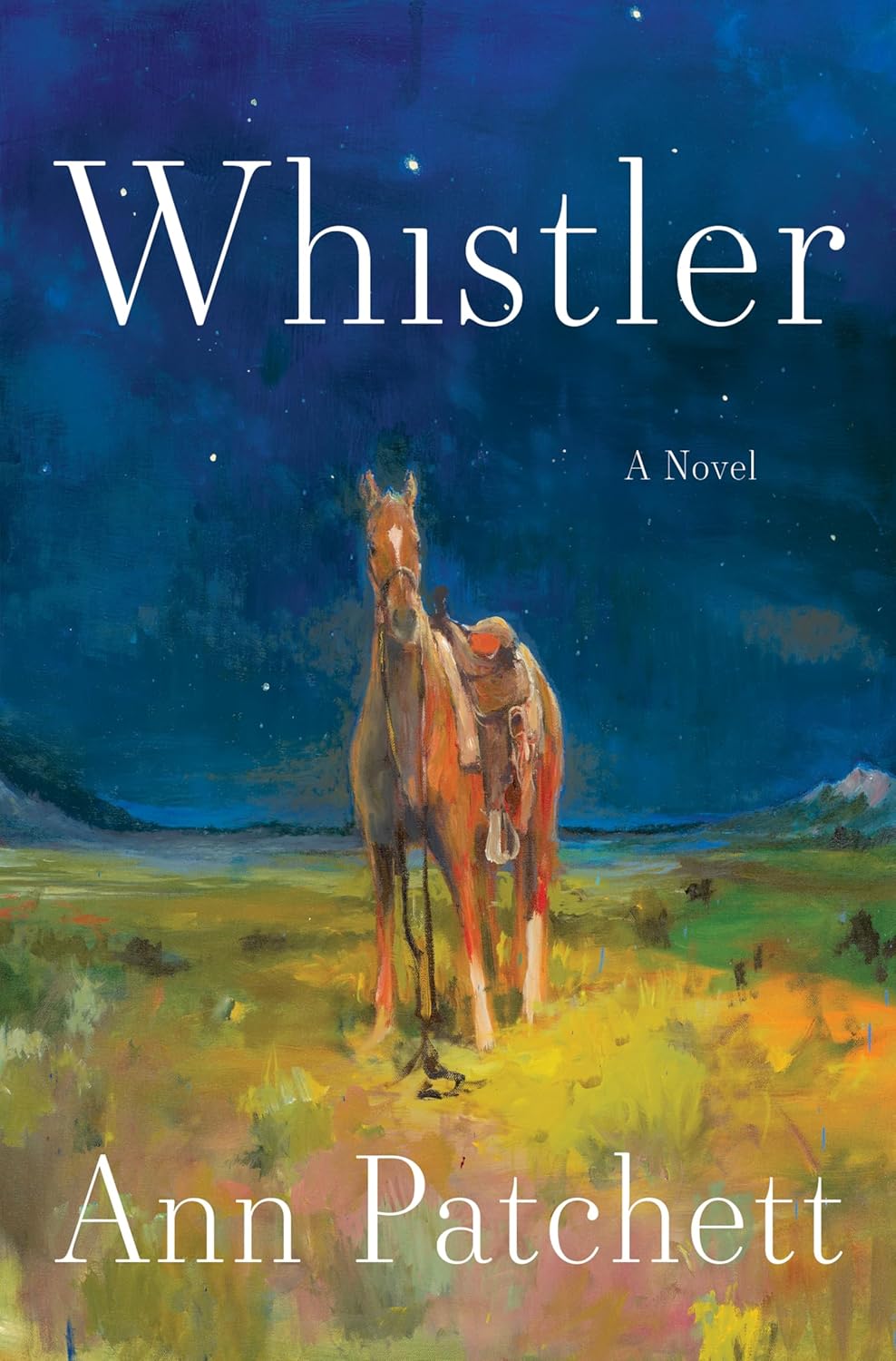
In a reading experience comparable to pruning a bonsai, subdued tones frame Ann Patchett’s sneakily captivating new novel, Whistler. In it, Daphne Fuller, a 53-year-old English teacher, and her husband are touring the Metropolitan Museum of Art when they bump into Eddie Triplett, who was Daphne’s stepfather 40 years prior.
On a long-ago evening while Daphne’s sister lay in a hospital bed recovering from an appendectomy, Eddie took Daphne on a stargazing drive with the headlights turned off to maximize visibility. They missed a turn and careened off the road, Eddie severely injuring his ankle and Daphne cutting her head. The most lasting damage, though, came from Daphne’s mother, Abigail, who declared Eddie could not be trusted with the children and divorced him. This marriage of less than two years ended, but Whistler reveals the small, powerful ways in which Eddie’s and Daphne’s “hearts were forever stitched together.”
Thus, their chance meeting rekindles a past relationship that become deeply meaningful through the benefit of age and wisdom. Daphne had three father figures in her life, and they float into the story like Dickens’ Christmas ghosts. Her biological father, a selfish man, abandoned his family in favor of the sea. Daphne’s recent stepfather, Lucas, stayed with Abigail for the remainder of her life, but Daphne and he were never close. It was Eddie’s departure under unfortunate circumstances — and the peeling away of the layers surrounding it — that form the central plot of Whistler.
The reunited Eddie and Daphne warm to each other gradually, their shifting dynamic captured through tender scenes. With time, they even brave another car ride together, Eddie now calling himself a tripod because he relies on a cane as Daphne drives him to the hospital for an appointment:
The day was hot and bright, and it seemed almost funny to remember how cold we’d been. How alone. Forty-five years later we were stuck in traffic on the FDR, watching the boats slicing their way up the East River.
The sunny waiting room was crowded. In some cases you didn’t know who was the patient and who was coming along for the ride, but then there were people who looked like they were assembled from a bone kit, translucent and bald in their wheelchairs, their sock hats pulled low against the air-conditioner’s chill.
Daphne tells the story in first-person narration but riveting third-person flashbacks to 1980 appear throughout. After the accident, Eddie and Daphne spent a freezing night trapped in the wrecked car scrounging for blankets and food; she remembers it as the happiest she’d ever been. While awaiting rescue, Eddie tells Daphne about a book proposal he recently received. It’s about a horse named Whistler dramatically throwing a Wyoming rancher to the ground. As the rancher clings to life, she floats in a near-death reverie and is visited by key figures from her past. She survives only because the horse returns to save her.
This may not have been the best anecdote for Eddie to recount while he and his stepdaughter were themselves in an incredibly dangerous situation, but his attempt to lighten the mood was pure.
Patchett has published successful novels since the early 1990s, and her 2001 breakout, Bel Canto, named one of the best books of the century by the New York Times, cemented her firmly atop the literary landscape. Her books often feature genial, thoughtful characters, and the lack of hostility in her work can be mistaken for an absence of tension. While many contemporary authors obsess over raising their characters’ stakes to fuel momentum, Patchett builds significance in a smoother, often more effective, way.
As a sentimental examination of life and family, Whistler succeeds. Crisp prose and a halcyon plot driven by peaceful people exert the force of a steady breeze that never slams the shutters closed. Conflict and challenging situations very much exist here and are addressed head on — sometimes with resolution, but often (just like in real life) with acceptance. This is a contemplative book that will leave readers in a warm, speculative daydream.
Ryan Davison, Ph.D., is a writer and literary critic residing in Portugal and the U.S. He has contributed to the Malahat Review, the Independent, Open Letters Review, Edelweiss+, and NetGalley. Ryan’s blurbs are often cited by LitHub’s Book Marks, the popular book-review aggregator. Along with literary criticism of traditional and independently published works, Ryan holds a doctorate in neuroscience and authors scientific papers.