Our Week in Reviews: 5/17/25
- May 17, 2025
A recap of the books we’ve spotlighted in the past few days.
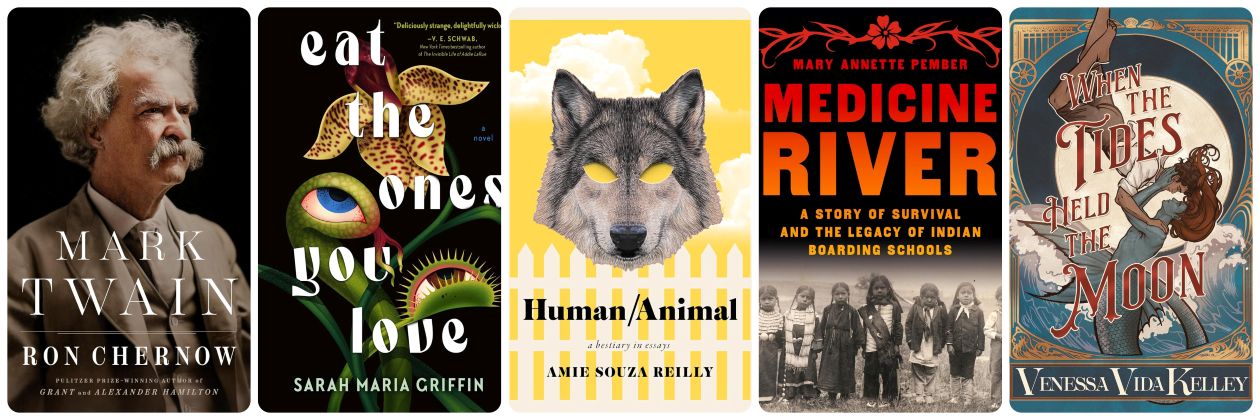
Mark Twain by Ron Chernow (Penguin Press). Reviewed by Karl Straub. “Ron Chernow’s Mark Twain arrives during this difficult season for long-dead writers, and it’s hard to imagine a biography proving more useful to Twain lovers and bashers alike. In examining the art and life of a man both adored and reviled, Chernow has presented the case without romanticizing or (it must be said) bowdlerizing his subject. If Twain were alive to read this book, or to lift it, he might wonder aloud how many people would actually survive the trip from one cover to the other.”
Eat the Ones You Love: A Novel by Sarah Maria Griffin (Tor Books). Reviewed by Tara Campbell. “With the lush imagery of floral fecundity against the decay of the scuzzy surroundings, I was fully immersed in this world. So, why am I conflicted? Because at the heart of it, this isn’t just a monster story or body horror; it’s a tale about an abusive relationship. The evil, masculine-coded Baby maintains control over Neve and Shell — knowing they’re not willing participants — with classic abuser strategies.”
Human/Animal: A Bestiary in Essays by Amie Souza Reilly (Wilfrid Laurier University Press). Reviewed by Yelizaveta P. Renfro. “In other words, Reilly’s situation becomes a microcosm for a much larger pattern of ills within our society. Her book is guided more by the meandering path of her reflections and etymologies than by the specifics of her conflict with the neighbors. In the end, the particular wrongs of the brothers matter much less than Reilly’s meticulous processing of them. Readers looking for a wide-ranging meditation on our country’s political climate and a host of other issues will find much food for thought here.”
Medicine River: A Story of Survival and the Legacy of Indian Boarding Schools by Mary Annette Pember (Pantheon). Reviewed by Peggy Kurkowski. “Life at a typical boarding school like St. Mary’s included military-style regimentation, hard labor, and exposure to diseases that would travel back to the village with the infected student. Pember provocatively suggests that the U.S. government ‘weaponized’ contagions during the era to help create ‘a final solution to the country’s Indian problem.’ In addition to the health risks, daily denigration by the nuns led to traumatized children growing into traumatized adults.”
When the Tides Held the Moon by Venessa Vida Kelley (Erewhon Books). Reviewed by Emma Carbone. “Even more unlikely, Benny finds a place for himself among the members of Morgan’s Menagerie of Human Oddities as they work to capture an actual merman in the East River. Haunted by the impossibility of both the capture and his role in it, Benny reluctantly accepts a job maintaining the tank. Meanwhile, he slowly befriends the members of the sideshow, including Black strongman and aspiring writer Matthias Martin, ‘Flexible Fräulein’ Sonia Kutzler, and others, all of whom expand Benny’s worldview as they welcome him. But once the team succeeds in its mission and Benny learns more about the now-imprisoned merman, Río, he begins to understand how deeply wrong everything is.”
Don’t miss another excellent book review, author interview, or feature! Subscribe to our free newsletter and follow us on Instagram, Facebook, Pinterest, Bluesky, and LinkedIn. Advertise with us here.