Accumulation: A Novel
- By Aimee Pokwatka
- G.P. Putnam’s Sons
- 336 pp.
- Reviewed by Sarah M. Lawrence
- June 10, 2026
Strange occurrences rattle a woman already on edge.
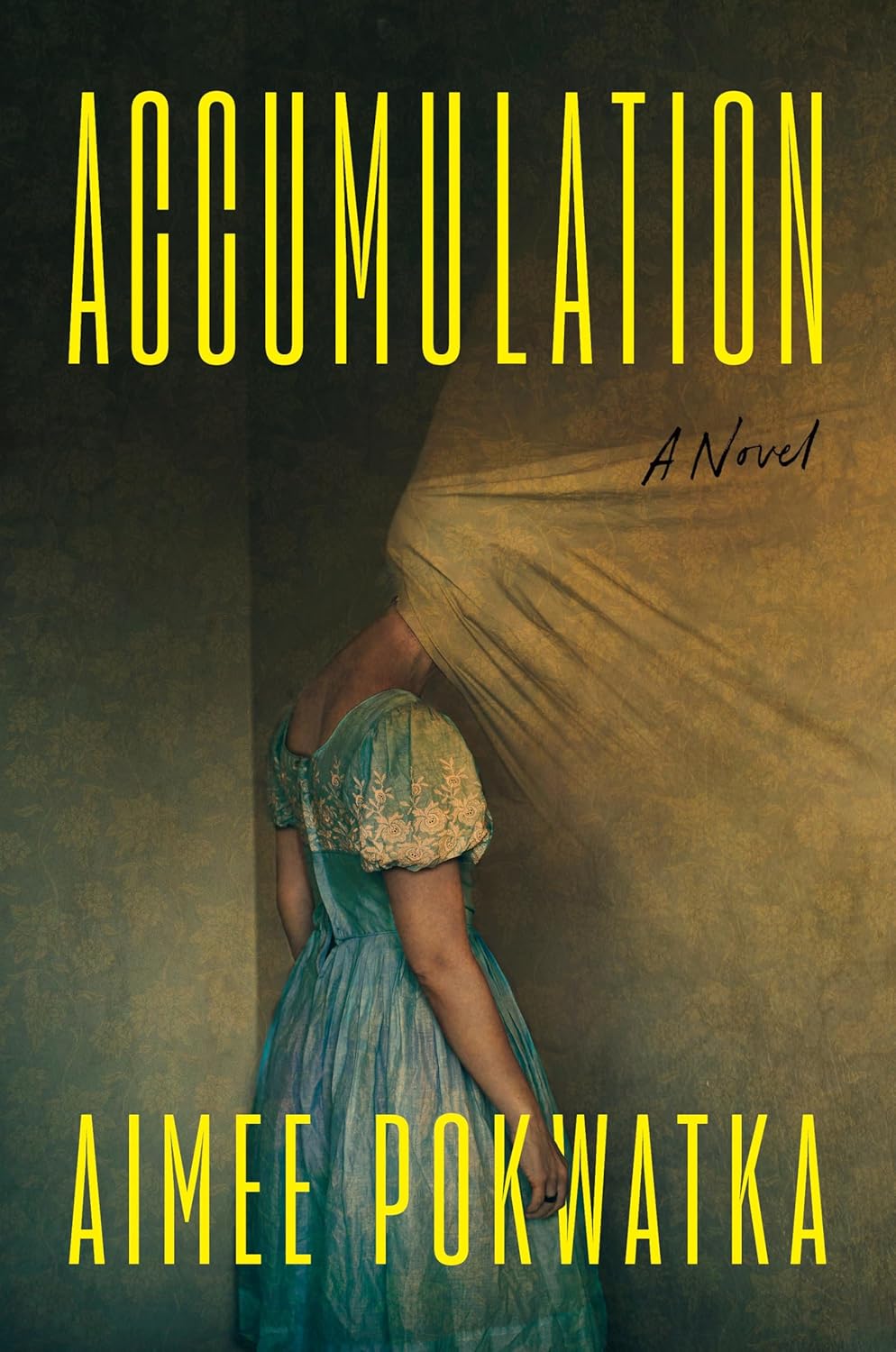
Aimee Pokwatka’s Accumulation attempts to conjure the entrapped feeling that can come with domesticity (especially for women) through the eyes of Tenn, a recently retired documentary filmmaker who left her passion behind in the name of full-time parenthood.
Tenn and her family — husband Ward and children Aisling and Anders — have just moved from North Carolina to New York for Ward’s new high-paying, serious job. As a token of love, he buys his wife her dream house. But as they settle in, weird things begin occurring: A random doll appears in the yard, the faucet keeps turning on, and the kids act strangely.
It doesn’t help that Tenn and Ward are having problems in their relationship. She’s left to do all the domestic chores because he’s caught up in his work. They also respond to the mysterious occurrences differently, which only adds to the discord. Ward doesn’t even believe the happenings are paranormal; there has to be a reasonable explanation for everything. Eventually, though, circumstances force them to put their disagreements aside and try to overcome their bizarre new reality together.
I really appreciated how Pokwatka was able to weave the themes of identity diffusion, artistic expression, and domestic bonds into a haunted-house metaphor. Because of the strain created by the otherworldly occurrences, Tenn is compelled to face her own past trauma and other conflicts she unknowingly left behind.
Soon, she starts to get confused about who she is and the choices she’s made, including the one to abandon her beloved career. She tries to get a less-demanding job to help with the money — and to give herself a sense of purpose outside of motherhood — but her husband’s work comes first. The resulting tension between her and Ward is only natural:
“‘I’m really sorry,’ she said, though now that she thought about it, she wasn’t sure why she kept apologizing. She hadn’t done anything wrong. She was just doing it out of habit, because she didn’t want him to be upset.”
The novel is creepy and unsettling in a good way. I thought it would be a typical ghost story but was happy to be corrected. Here’s one example that demonstrates how the stakes are a bit higher all around:
“[Tenn] was aware of her breathing, keeping it controlled, because fear stirred inside her of what might happen if she got mad. The silhouette in the hall was there for a reason, a reason that was unclear to her.”
Unfortunately, while Pokwatka made some great stylistic choices, her ending felt abrupt and lacked the emotional authenticity of all that came before it. Some important conclusions about the necessity of artistic expression were left undrawn, and other narrative threads — including the one concerning Tenn and Ward’s marriage — were tied up too neatly.
None of this detracts from the fact that Accumulation is a fun, spooky read, but the story would’ve been far more plausible if certain elements had been better fleshed out.
Sarah M. Lawrence is pursuing a degree in English at Penn State.